When the Tesla Cybertruck rolled off the gigafactory line with an exoskeleton made of unpainted, ultra-hard 30X cold-rolled stainless steel, it shattered automotive conventions. However, with thousands of identical raw metallic trucks populating suburban roads and construction sites, new owners are asking a fundamental question: Can you paint a Cybertruck?
Technically, anything with a solid surface can be covered in paint. Practically and economically, however, attempting a traditional automotive paint job on a Cybertruck is an engineering nightmare that frequently results in peeling, flaking, and destroyed resale value.
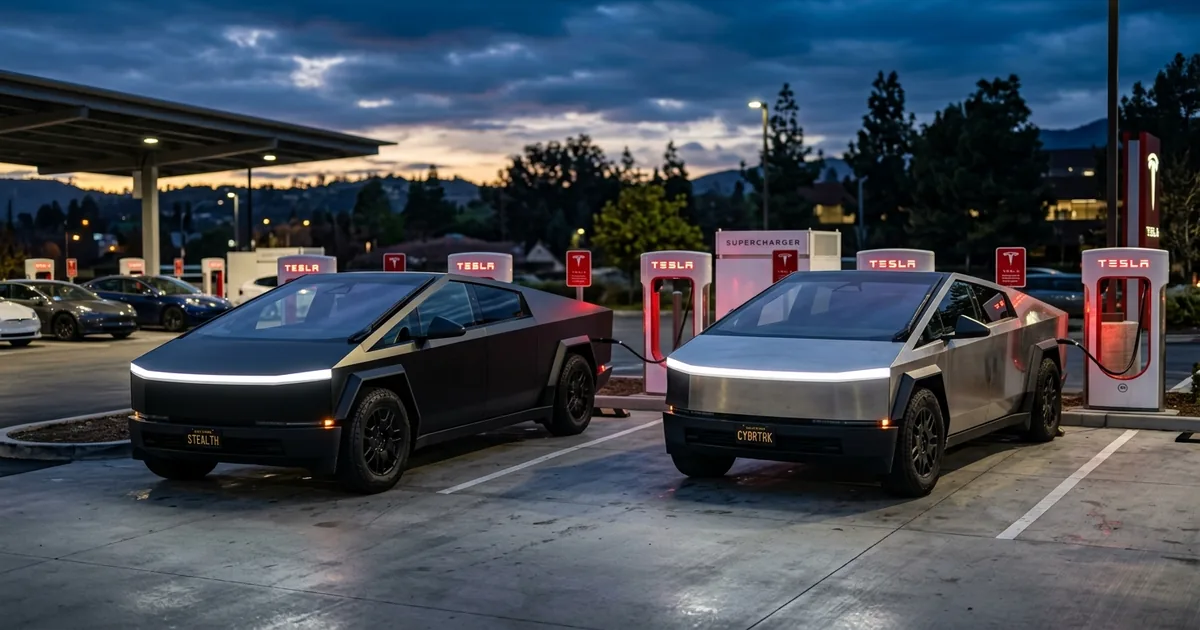
Wrapping the Cybertruck’s exterior provides custom coloration and fingerprint protection without compromising the stainless steel body.
Below is the definitive metallurgical and installer-verified breakdown of why traditional paint fails on stainless steel, and why vinyl wraps and color paint protection films (PPF) are the true engineered solutions.
The Metallurgy Problem: Why Paint Won’t Stick to Stainless Steel
Standard automobiles are constructed from stamped sheet steel or aluminum. Before color application at the factory, panels undergo multi-stage electro-deposition primer baths (E-coat) that chemically bond to the metal, providing a micro-porous foundation for base coats and clear coats to adhere.
The Cybertruck presents an entirely different metallurgical environment:
- Chromium Oxide Passive Layer: Stainless steel resists corrosion because its chromium content reacts with atmospheric oxygen to form an invisible, chemically inert chromium oxide film. This passive barrier prevents paint binders from forming mechanical or chemical anchors.
- Thermal Expansion Discrepancy: Stainless steel expands and contracts under temperature swings at different rates than standard automotive primers. As the Cybertruck sits in the sun, rigid paint layers experience shear stress, leading to hairline spiderweb cracking and sheet flaking.
- The Sanding and Etching Requirement: To get paint to stick to stainless steel, a body shop must mechanically scour the entire exterior with aggressive 80-grit abrasives or acid-etch primers. Doing so permanently destroys the original directional brushed grain of the stainless steel. If the paint ever chips, the truck cannot simply be polished back to bare metal.
Painting vs. Wrapping a Cybertruck: Engineering Matrix
| Evaluation Factor | Traditional Automotive Respray | Cast Vinyl Wrap (3M / Avery) | Heavy-Duty Color TPU PPF |
|---|---|---|---|
| Surface Prep Required | Aggressive acid etching or coarse sanding | Surface degreasing with 70% IPA alcohol | Surface degreasing with clay bar |
| Reversibility | 100% Permanent (destroys factory stainless grain) | 100% Reversible (peels off cleanly) | 100% Reversible (peels off cleanly) |
| Fingerprint and Smudge Defense | Good (standard clear coat) | Excellent (satin/matte hides skin oils) | Exceptional (hydrophobic self-healing top coat) |
| Rock Chip and Scratch Defense | Poor (chips expose raw shiny metal beneath) | Moderate (vinyl can tear on sharp strikes) | Extreme (8-mil TPU absorbs direct gravel hits) |
| Average Project Cost | $8,000 – $15,000+ (custom body shop) | $3,200 – $5,000 (specialist wrap shop) | $5,500 – $7,500 (premium PPF shop) |
| Factory Warranty Impact | Potential corrosion warranty disputes | Zero impact on Tesla factory warranty | Zero impact on Tesla factory warranty |
Why Vinyl Wraps and Color PPF Are the Superior Solution
Because painting is expensive, permanent, and prone to delamination, virtually all Cybertruck customization relies on automotive film technology:
- Fingerprint Concealment: Bare stainless steel is notorious for attracting dark, oily fingerprint smudges around door edges and tailgate buttons. Installing a satin black, olive green, or cement grey wrap completely eliminates fingerprint staining.
- Instant Reversibility: When it comes time to sell or return the truck, the vinyl wrap can be heated and removed in a single afternoon, revealing virgin, untarnished stainless steel underneath.
- Broad Flat Panel Synergy: Because the Cybertruck possesses no compound curves or rounded fender flares, experienced wrap installers can drape broad 60-inch vinyl rolls across the geometric panels with minimal tension, virtually eliminating the risk of edge lifting.
Official Tesla Factory Wraps vs. Aftermarket Wrap Shops
Recognizing owner demand for color, Tesla introduced official wrap services at select Service Centers across North America:
- Tesla Official Color Wraps ($6,000 to $6,500): Tesla offers urethane-based color wraps (such as Satin Stealth Black, Slipstream Blue, and Forest Green) installed by certified service technicians. While backed by a factory warranty, color choices are strictly limited to fewer than ten solid shades, and pricing sits at the top of the market.
- Aftermarket Wrap Shops ($3,200 to $5,000): Independent restyling shops provide access to hundreds of distinct colors from premium manufacturers like 3M, Avery Dennison, and KPMF. You can select custom matte finishes, metallic flakes, digital camo prints, or dual-tone liveries at significantly lower price points.
Ready to see how your Cybertruck looks transformed in satin black, desert camo, or military green? Preview Your Custom Tesla Wrap in Real-Time 3D to experiment with colors and finishes on an accurate 3D model.
Related Guides and Reading
- Tesla Cybertruck Wrap Colors, Costs and Materials Guide — Stainless steel prep, color options, and full visualizer tips for Cybertruck owners.
- Tesla Factory Wrap vs. Aftermarket Restyling Shops — In-depth comparison of official Tesla wraps against custom third-party installations.
- How Much Does It Cost to Wrap a Tesla in 2026? — Detailed price breakdown covering vinyl materials, labor hours, and shop fees.
- Tesla Vinyl Wrap vs. Paint Protection Film (PPF) — How thin aesthetic vinyl compares against durable 8-mil self-healing TPU armor.
- Best Tesla Wrap Colors: Top Trends, Finishes and 3D Visualizer — The definitive guide to selecting durable, trending wrap colors.